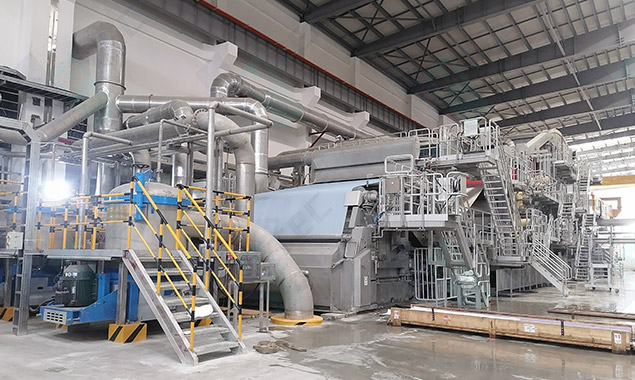
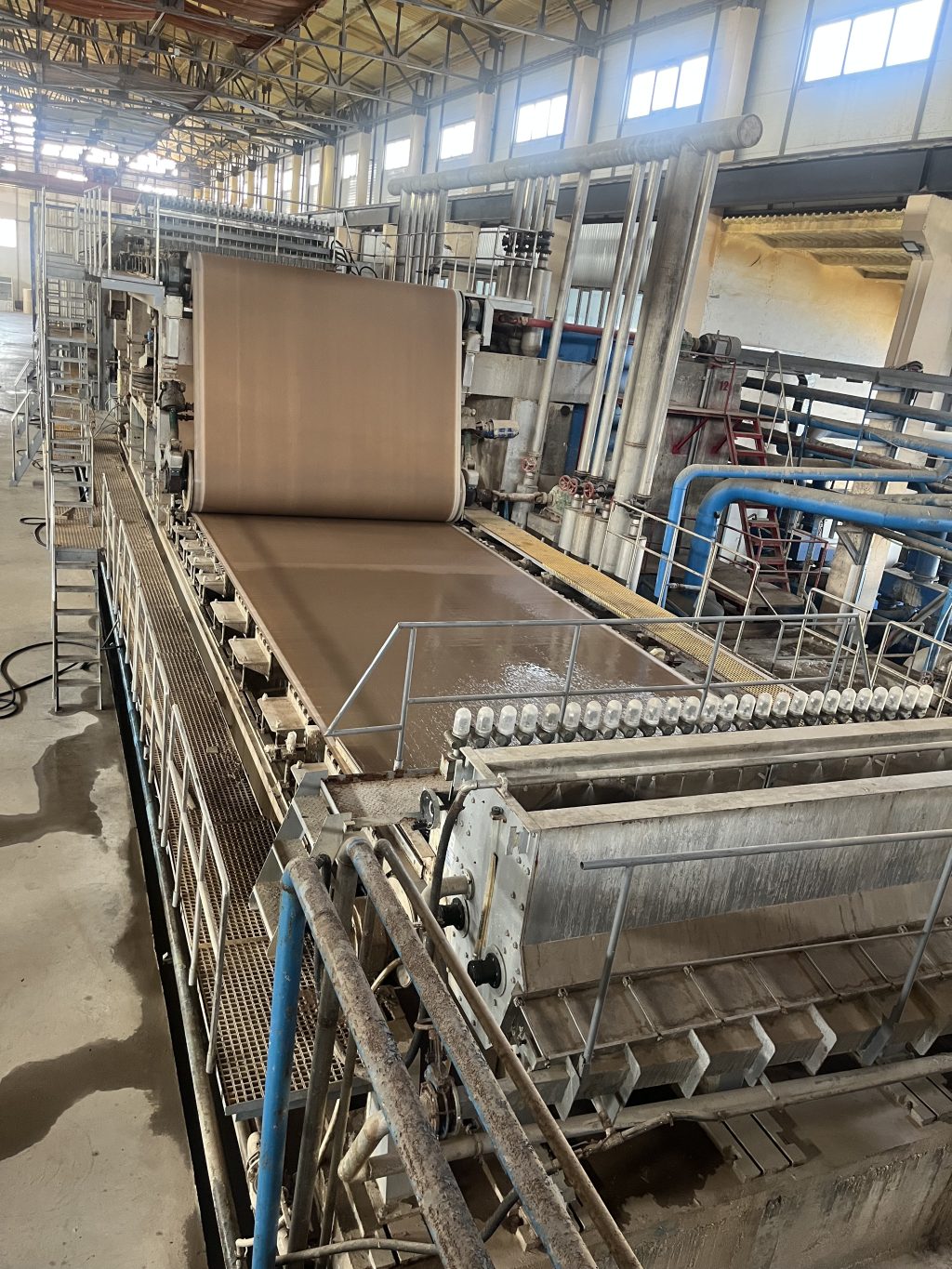
Forming Section
In daily papermachine operation, forming section issues rarely present themselves as sudden failures. More often, they emerge through small but persistent changes—slower drainage response, increasing cleaning effort, or unstable wire edges. The real engineering challenge is not fixing one abnormal event, but understanding whether these signals point to a deeper system imbalance.
Across multiple forming section evaluations conducted by PMTEC, wire blinding and tracking deviation repeatedly appear as two typical, experience-driven issues. They are not complicated, but they clearly reveal how well the forming section is understood.
Ⅰ、Wire Blinding: Usually Starts as “Acceptable”
Wire blinding rarely begins as a serious problem. In most cases, cleaning still seems sufficient—until the required frequency quietly increases. At this stage, the issue is often underestimated.
1.1 What operators tend to notice first
Based on PMTEC’s field observations, the following changes often precede more severe blinding:
- Shorter cleanliness retention after wire cleaning
- Visible changes in the drainage line without real efficiency improvement
- Gradual formation variability across the sheet
These signals indicate that deposits are no longer limited to the wire surface.
1.2 How engineers interpret the causes
During troubleshooting, PMTEC typically avoids focusing on a single parameter. Instead, the issue is viewed as a system interaction:
- Changes in fines and filler content increase wire pore occupation
- Stickies gradually accumulate in the white water loop
- Microbiological control no longer matches system closure
- Cleaning strategy emphasizes force rather than coverage and rhythm
1.3 Practical differences between mitigation approaches
| Approach | Short-Term Effect | Sustainability | Typical Outcome |
| Higher shower pressure | Immediate | Poor | Accelerated wire wear |
| More frequent cleaning | Moderate | Moderate | Higher operational load |
| Stock and chemistry adjustment | Slow | Good | Requires coordination |
| System balance optimization (PMTEC practice) | Stable | Good | Requires trend tracking |
1.4 How this issue usually stabilizes
In most cases, once the system returns to a reasonable operating window, wire blinding does not disappear entirely—but it becomes predictable and manageable.
Wire blinding is rarely a cleaning capacity issue; it is a system balance issue.
Ⅱ、Wire Tracking: Rarely the First Deviation
When tracking deviation is treated as a one-time incident, it often returns.
2.1 Early signals before tracking problems
Across PMTEC-supported inspections, noticeable tracking deviations are often preceded by:
- Increased activity of the tracking actuator
- Faster-than-normal wire edge wear
- Elevated temperatures at selected guide rolls or bearings
When ignored, these signs typically surface under higher speed or load variation.
2.2 What engineers look beyond alignment
While alignment and parallelism are essential, field experience shows that greater attention should be paid to:
- Tension behavior under different operating conditions
- Local friction differences caused by showers or stock splash
- Whether tracking system response matches actual machine behavior
2.3 Results under different management styles
| Management style | Tracking frequency | Production impact |
| Reactive correction | High | Frequent stops |
| Periodic manual checks | Medium | Experience dependent |
| Condition monitoring & trending (PMTEC approach) | Low | Early intervention |
Tracking stability improves significantly when deviation is treated as a condition change rather than a failure.
Ⅲ、From Fixing Issues to Building Stability
Across multiple optimization projects, PMTEC has observed a clear shift: forming section management is moving from solving individual problems to preventing them.
Stable operation does not mean zero fluctuation—it means fluctuations remain within a controlled range.
What stable operation usually relies on
| Area | Practical focus | Long-term value |
| Process | Parameter consistency | Stable quality |
| Equipment | Alignment and wear | Service life |
| Data | Trends over snapshots | Early judgment |
| Standards | Repeatable actions | Reduced dependency |
When experience is documented and reviewed, stability becomes a system capability rather than personal know-how.
Ⅳ、Closing Thoughts
Wire blinding and tracking deviation are not inherently complex issues, but they accurately reflect how well the forming section is understood. Through continuous observation, data accumulation, and engineering judgment, forming section operation can shift from reactive response to predictable control.
For many papermachines, this transition is an unavoidable step toward long-term stable operation.