
When high-pressure condensate is discharged into an atmospheric receiver, a portion flashes back to steam and vents to atmosphere — unrecoverable. At 9 bar, that fraction is approximately 15%. On a paper machine dryer section producing 5,000 kg/hr of condensate, this means 762 kg/hr of steam lost continuously. A high-pressure condensate return system prevents this by maintaining pressure throughout the return circuit, preserving condensate enthalpy and returning it to the boiler feedwater. The engineering and financial case is straightforward once the numbers are on the table.
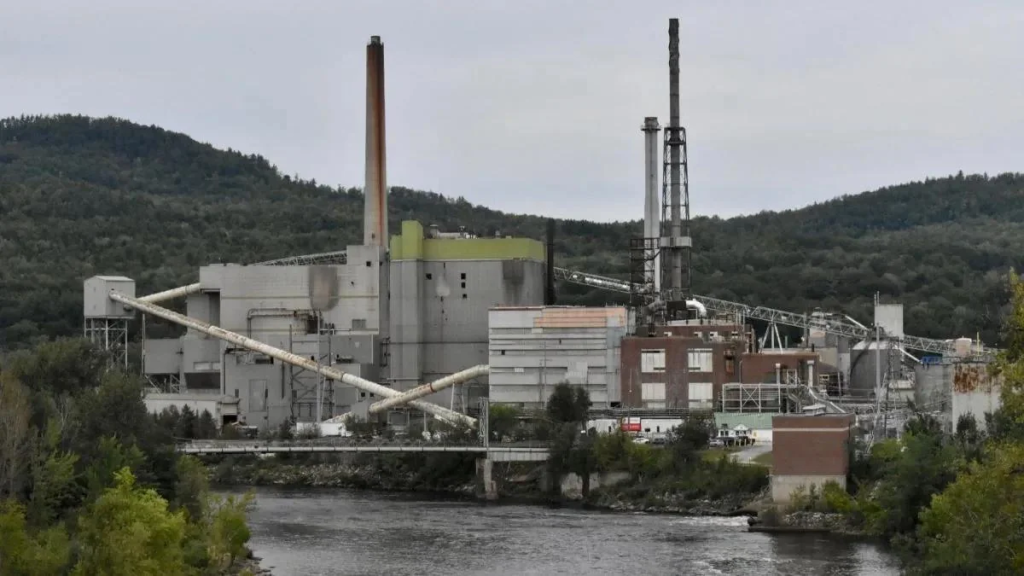
Ⅰ、Flash Steam Losses by Pressure
Flash steam percentage is derived from steam tables. The higher the system pressure, the greater the fraction lost when condensate is dropped to atmospheric conditions. Table 1 covers the range typical of paper mill dryer sections:
| System Pressure (bar g) | Condensate hf (kJ/kg) | Flash Steam % to Atmosphere | Flash Loss at 5,000 kg/hr (kg/hr) |
| 3 | 561 | ~5.5% | ~275 |
| 6 | 670 | ~10.2% | ~510 |
| 9 | 763 | ~15.2% | ~762 |
| 13 | 840 | ~19.3% | ~965 |
Table 1. Flash losses at 0 bar g back-pressure, 5,000 kg/hr condensate stream. Actual values vary with subcooling, trap performance, and pipe losses.
Ⅱ、Calculating the Annual Financial Loss
The annual loss from atmospheric condensate return can be estimated in three steps.
1. Flash Steam Fraction

Where:




2. Flash Steam Mass Flow

Where:


3. Annual Financial Loss

Where:


Example
For a system operating at:




The flash steam loss is:

So the annual financial loss is:


Use the plant’s actual fully loaded steam cost — including fuel, water treatment, boiler chemicals, and boiler efficiency — for a more accurate ROI evaluation.
Ⅲ、System Comparison
| Factor | Atmospheric Return | Atmospheric Return |
| Flash steam losses | High — vents to atmosphere | Minimal — system pressure maintained |
| Heat recovery | Partial — sensible heat only | Full — condensate enthalpy returned to boiler |
| Boiler feedwater temp. | Lower — more cold make-up required | Higher — less fuel to reheat feedwater |
| Released boiler capacity | None | Significant |
| Make-up water volume | Higher | Lower — water treatment costs reduced |
| CO₂ emissions | Higher | Lower |
| Engineering complexity | Low | Moderate — full pressure sizing required |
Ⅳ、Paper Mill Context
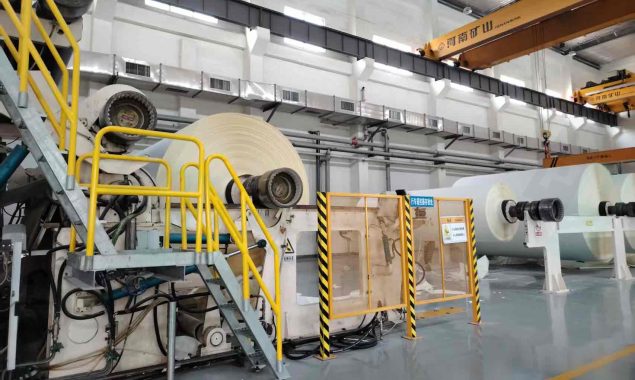
Dryer sections account for 60–70% of total paper machine energy and represent one of the highest continuous steam loads in industry. Most modern machines already use a cascading steam circuit — high-pressure steam feeds the early dryer groups, with flash recovery stepped down through the later groups. This internal recovery is by design. The issue is the final condensate leaving the system: routing it to an atmospheric hot well discards residual heat that a high-pressure return system would preserve and return to the boiler.
For mills running close to boiler capacity, recovering this steam directly relieves the steam balance without additional boiler investment.
Ⅴ、Engineering Requirements
A correctly specified high-pressure return system requires: a pressure-rated receiver vessel certified to the applicable code; level and pressure controls to maintain system pressure; a pump set selected for hot condensate service; safety relief valves and pressure trip interlocks; and condensate instrumentation. The engineering difference from an atmospheric hot well is entirely in specification, pressure rating, and control logic.
Four areas require specific attention:
- Pump NPSH — Condensate near saturation temperature leaves very little NPSH margin. Cavitation from under-specified pump selection is the most common reliability failure in these systems.
- Steam trap selection — Traps must match the actual pressure differential and condensate load at each collection point. Undersizing causes flooding; oversizing wastes steam. Both are common at higher pressures.
- Return line sizing — If system pressure is not fully maintained, return lines carry two-phase flow. Standard single-phase sizing criteria do not apply; undersized lines cause water hammer and trap failure.
- Dryer section control integration — The return system interacts directly with dryer section steam and condensate controls. The design must be reviewed against the existing control philosophy, particularly for grade changes and sheet break recovery.
PMTEC
PMTEC provides full mill solutions for the paper and pulp industry, covering process utilities, steam and condensate system engineering, and capital project delivery.
For condensate return upgrade projects, PMTEC supports clients from feasibility assessment through engineering specification, equipment procurement, and site commissioning.