
Walk into any paper mill handling coated grades, and you will find different views on calendering. Some mills still rely on supercalenders. Others have moved to soft nip calenders and achieved stable results. Both choices can be correct, depending on the paper grade, quality target, and operating conditions.
The real question is not which calender is better in general. It is which one matches the paper being produced, the surface specification required, and the mill’s capital and operating constraints. To make the right choice, engineers need to understand how each method affects the sheet mechanically, thermally, and structurally.
Why Paper Needs Calendering
A coated sheet coming off the dryer is not fully ready for printing or converting. Its surface may still be rough, uneven, and dull. The base paper carries marks from the forming wire and press felts, while the coating layer can still contain microscopic high and low points even after blade levelling. These defects may later appear as mottle, uneven ink absorption, or gloss variation.
Calendering improves this surface condition. Under controlled pressure, temperature, and contact time, the calender smooths, compresses, and slightly densifies the sheet surface, improving gloss, smoothness, and printability.
How the Supercalender Works
01-The mechanical architecture
A supercalender is a stack machine, typically with 8 to 16 rolls alternating between hard cast-iron or steel rolls and soft fibre-filled rolls made from compressed paper or cotton. The sheet passes through multiple nips, gaining surface improvement at each pass.
This multi-nip structure gives the supercalender its typical effect: high gloss through repeated mechanical polishing. The hard rolls apply high local pressure, while the soft rolls deform slightly under load, creating brief but intense contact at the nip.
02-Key operating parameters
Ⅰ、Specific nip pressure
Nip pressure is the main variable controlling sheet density, smoothness, and gloss. Higher line load increases compression, densifies the coating, and flattens micro-roughness. However, excessive pressure reduces bulk and may cause black pressing, an irreversible darkening of the coating surface.
Ⅱ、Number of rolls and machine speed
More rolls at the same line load improve gloss and smoothness because the sheet receives more nip passes. Higher machine speed reduces dwell time in each nip, lowering the smoothing effect. To compensate, higher line load may be required, which also increases the risk of bulk loss.
Ⅲ、Sheet moisture and roll temperature
Moisture helps the coating respond to pressure. For coated paper on a supercalender, 4.5–6% moisture is a practical working range. If the sheet is too dry, the coating becomes brittle. If it is too wet, the coating may soften too much and increase the risk of black pressing. Roll surfaces are usually steam-heated to around 75–100°C.
The moisture conditioning step most mills underestimate
Uniform moisture before supercalendering is critical. Steam showers add surface moisture, but moisture needs time to distribute evenly through the coating layer. For better stability, coated stock is often conditioned in a controlled-humidity room for at least 72 hours before calendering. Without proper conditioning, mills may face gloss variation across the web that cannot be solved by calender adjustment alone.
How the Soft Nip Calender Works
01-The mechanical architecture
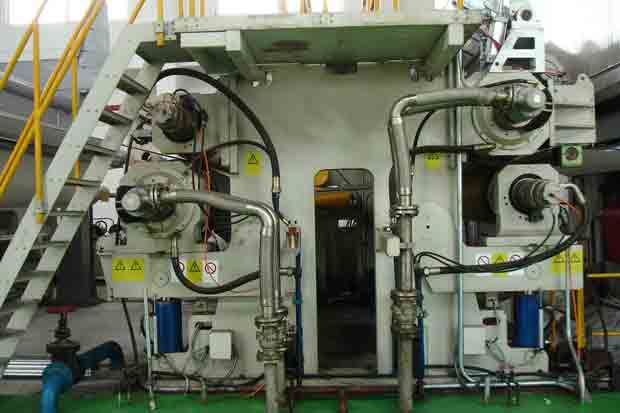
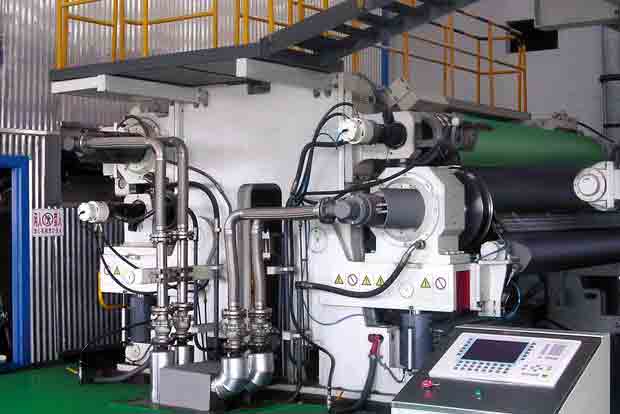
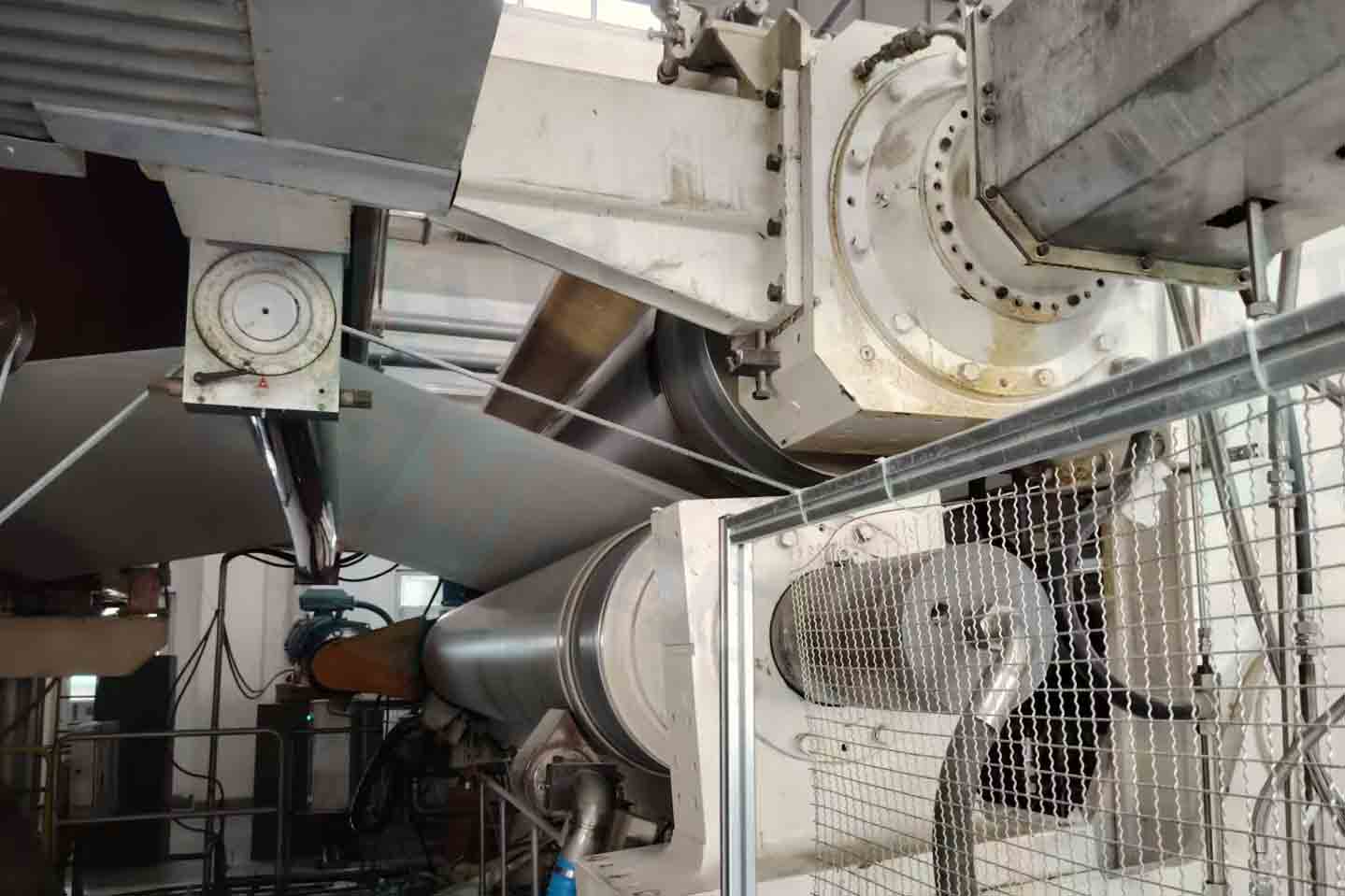
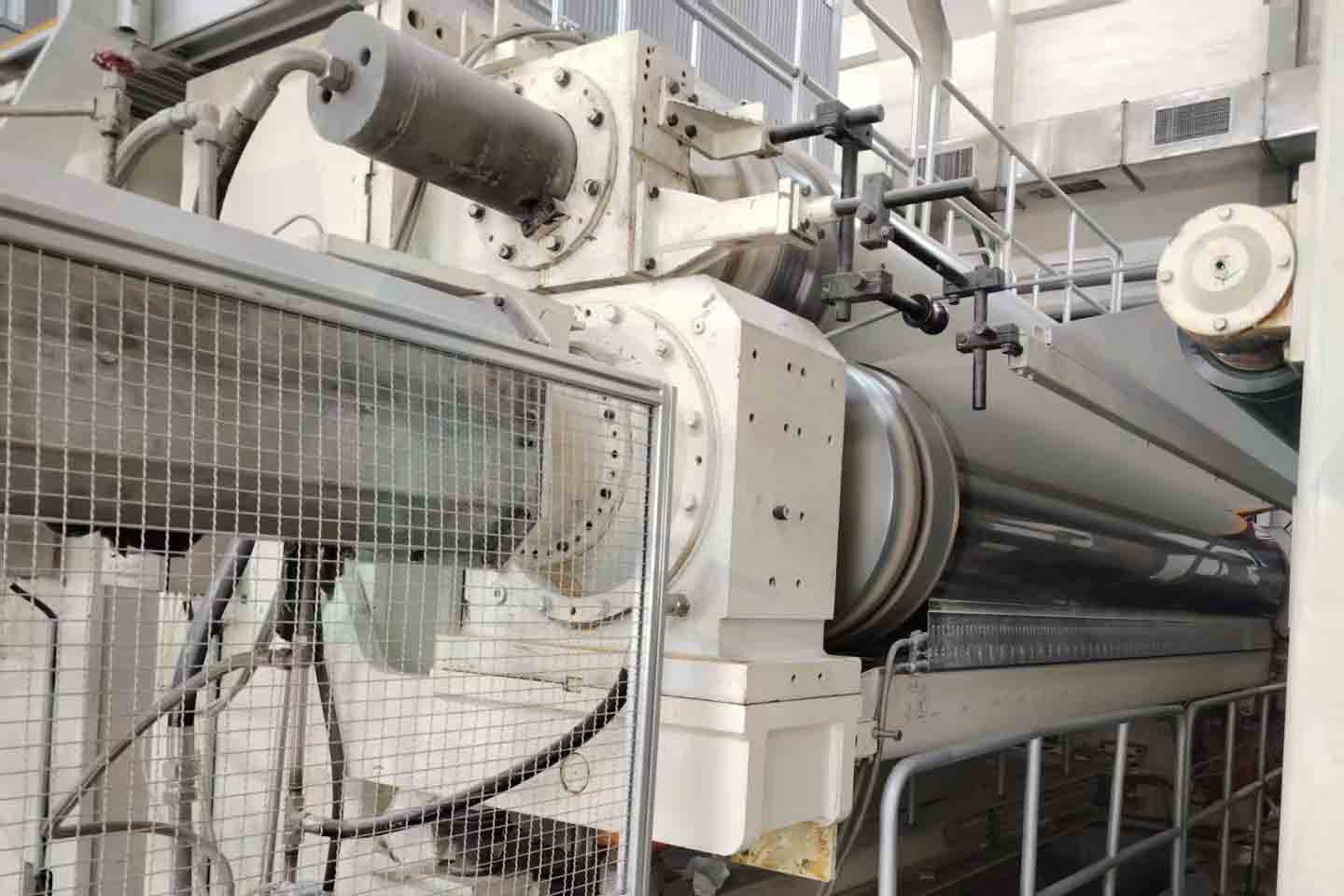
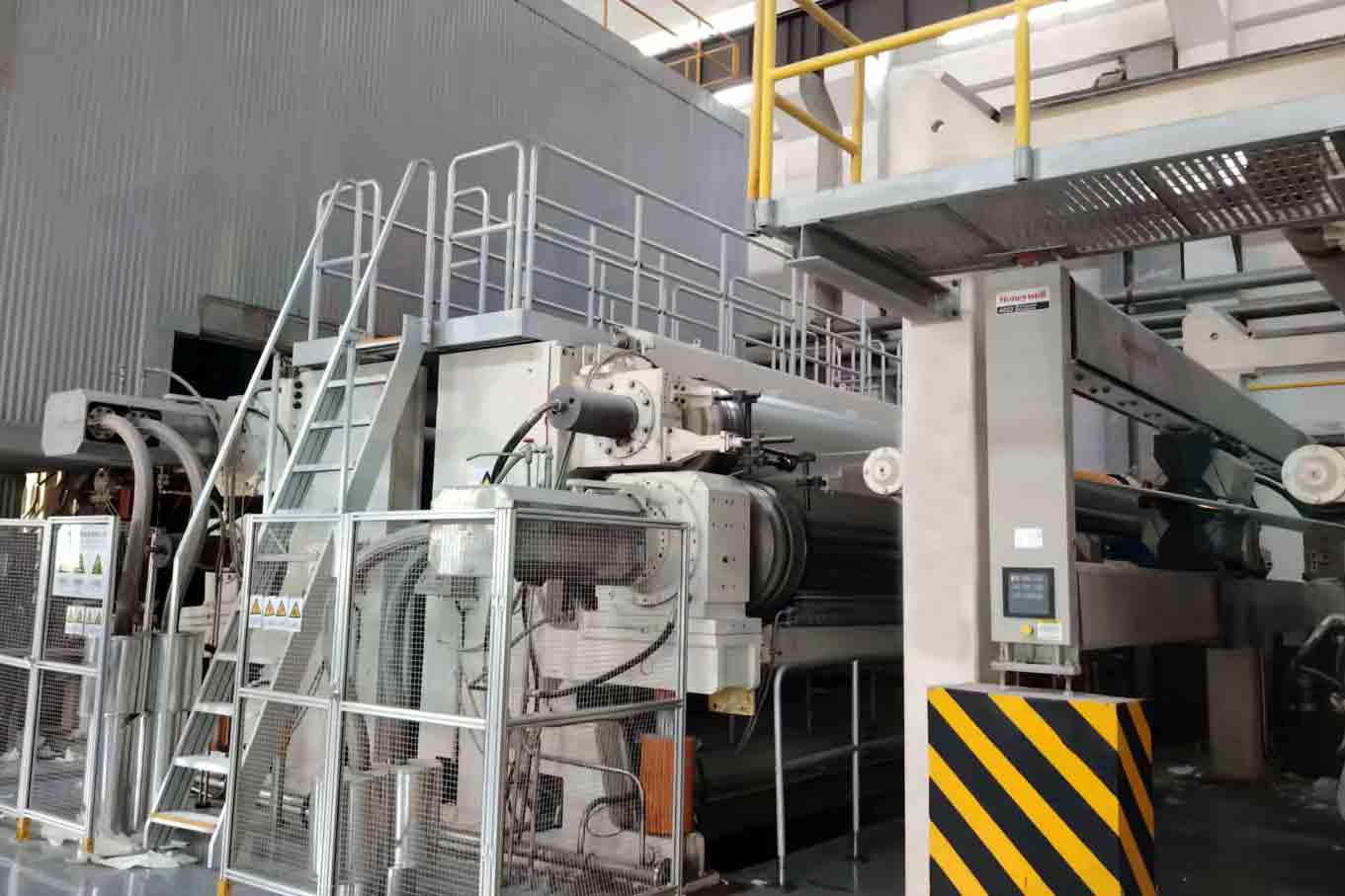
A soft nip calender uses a simpler nip structure: one heated hard roll paired with one elastic-covered soft roll. The polymer-covered soft roll deforms under load, creating a wider contact zone instead of a narrow contact line.
This contact zone is typically 5–10 mm wide, about ten times wider than a supercalender nip. As a result, unit surface pressure is much lower. Even at high line loads, a soft nip calender may apply only one-third to one-quarter of the surface pressure of a supercalender.
02-What temperature does in the soft nip
Temperature plays a stronger role in soft nip calendering. The heated hard roll normally operates at 160–200°C and transfers heat to the sheet during the extended nip contact time. This softens the fibre and coating structure from the surface inward, making the sheet easier to smooth at lower pressure.
This thermal plasticisation allows soft nip calendering to achieve high gloss and smoothness while preserving more bulk. The sheet is softened and reshaped, rather than heavily compressed.
Supercalender vs Soft Nip Calender: Direct Comparison
The table below compares the two technologies on the parameters that matter most to paper engineers and production managers.
| Parameter | Supercalender | Soft Nip Calender |
| Roll configuration | 8–16 alternating hard / fibre rolls | 1 heated hard roll + 1 elastic soft roll per nip station |
| Contact type at nip | Line contact — narrow, high unit pressure | Area contact — 5–10 mm wide nip; about 10× contact area |
| Unit surface pressure | High — mechanical polishing dominates | Low — about 1/3 to 1/4 of supercalender at similar line load |
| Operating temperature | Around 75–100°C roll surface; steam-heated | 160–200°C heated hard roll; each nip zone can be controlled |
| Primary gloss mechanism | Repeated mechanical polishing under high pressure | Thermal plasticisation + moderate-pressure smoothing |
| Bulk preservation | Lower — multi-nip pressure densifies the sheet | Better — lower unit pressure preserves more bulk |
| Two-sidedness control | More difficult to control | Better control through adjustable nip temperature |
| Machine integration | Off-machine; requires separate line and floor space | On-machine or off-machine; can run at PM speed |
| Roll cover / filler service interval | Fibre rolls require frequent grinding | Polymer-covered soft rolls have longer service intervals |
| Caliper / thickness control | More difficult across web width | Better with controlled deflection roll technology |
| Capital and operating cost | Higher due to separate line and drive system | Lower in many cases; less floor space and lower drive power |
Which Calendering Method for Which Grade
Neither technology is universally superior. The right choice depends on the surface quality required, the physical properties that must be preserved, especially bulk and stiffness, and the operating economics of the mill.
| Grade | Supercalender | Soft Nip | Key Reason |
| LWC (Lightweight Coated) | Traditional choice | Preferred for modern lines | Soft nip preserves bulk while achieving high gloss; on-machine integration improves efficiency |
| Art paper / coated fine paper | Still widely used | Increasingly adopted | Both can reach gloss targets; soft nip offers better two-sidedness control |
| Board / coated packaging | Limited due to bulk loss | Preferred | Higher basis weight requires bulk and stiffness preservation |
| Newsprint (SC-A, SC-B) | Traditional for SC grades | Less common | SC grades are closely linked with supercalendering; mechanical finishing remains cost-effective |
| Specialty / functional coatings | Often unsuitable due to high pressure | Preferred where post-coating calendering is needed | Lower unit pressure and controlled temperature reduce coating damage |
Choosing the Right Calender: A Practical Framework
Most investment decisions, whether for new calendering equipment or for shifting from supercalendering to soft nip, can be structured around the following points.
Choose a Supercalender when…
The grade is traditional SC newsprint or commodity coated paper where supercalendering is already the standard. Existing supercalender capacity is available. Production volume is high enough to justify continuous operation. Bulk is not a key specification.
Choose a Soft Nip Calender when…
Bulk preservation is important, especially for board grades and high-value printing papers. On-machine integration is preferred. Two-sidedness control is required. The grade includes functional or specialty coatings sensitive to high pressure. Reducing drive power, cover cost, and floor space is also a priority.
Moisture conditioning applies to both technologies
For both technologies, uneven sheet moisture is one of the most common causes of gloss variation, two-sidedness, and caliper instability. Proper moisture conditioning before calendering is essential. The cost is limited, but the improvement in surface consistency can be significant.
The Bottom Line
Supercalendering and soft nip calendering are not simply old versus new technologies. They serve different grades, quality targets, operating models, and investment strategies. Understanding the mechanical and thermal logic of each method helps engineers make decisions that work in production, not only on a specification sheet.
As with most paper mill engineering decisions, the answer is not only in the data sheet. It depends on what the machine is expected to achieve under real operating conditions.
About PMTEC
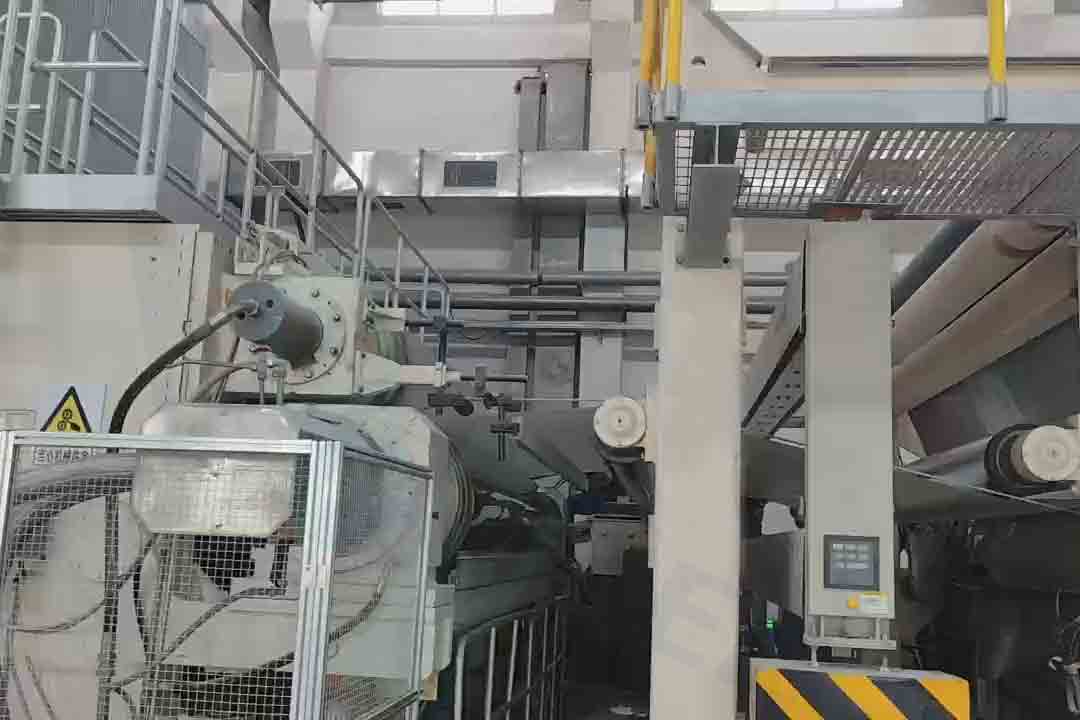
PM Zhengzhou Technology Co., Ltd. (PMTEC) supplies crown-controlled calenders, including soft calender and hard calender configurations, as part of complete paper machine and coating line solutions. PMTEC supports customers in equipment selection, machine specification, commissioning, and process optimisation, helping mills match calendering technology with real production needs.