
Coating plays an important role in specialty paper production, influencing surface uniformity, printability, barrier performance and other functional properties.
In actual production, however, coating defects are not always caused by the coating equipment itself. Coating preparation, base paper quality, application conditions and drying all have a direct influence on the finished product. Understanding these relationships is the basis for effective troubleshooting and stable production.
Coating Preparation — Quality Starts Before Application
Poor pigment dispersion and unstable viscosity are two common sources of coating instability.
Insufficient dispersion can leave agglomerated particles in the coating color, resulting in surface roughness, uneven coverage and local coating defects.
Meanwhile, variations in temperature, solids content and storage time can change coating viscosity, causing gradual fluctuations in coat weight.
Key parameters to monitor:
- Pigment dispersion and filtration
- Coating viscosity and solids content
- Mixing intensity and preparation time
- Coating temperature and circulation conditions
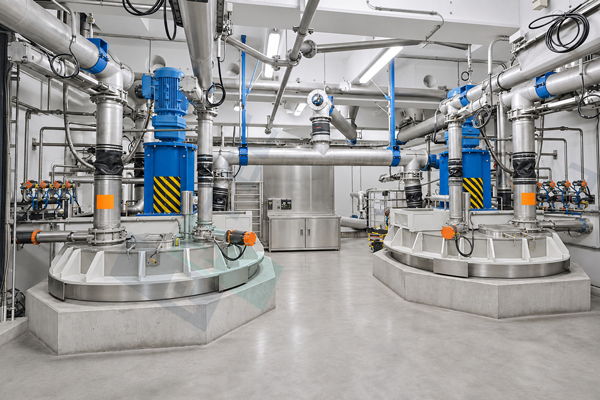
Maintaining consistent coating properties is often more effective than repeatedly adjusting the coating head.
Air Entrapment and Pinholes
Pinholes are small discontinuities in the coating layer. For functional papers, they may affect both surface appearance and barrier performance.
Air can enter the coating system at several stages:
- During mixing, through excessive agitation or insufficient agitator immersion.
- During transportation, through leakage on the pump suction side.
- During circulation, through inadequate deaeration or foam control.
Optimizing agitation, checking pipeline connections and controlling defoamer dosage can help reduce these defects.
Practical insight: When pinholes appear, check the coating preparation and supply system before changing the coating head settings. Base paper porosity and insufficient coating coverage should also be considered.
Blade Wear and Coating Streaks
In blade coating applications, continuous streaks in the machine direction (MD) are often associated with disturbances at the metering blade.
| Possible cause | Recommended action |
| Worn or damaged blade edge | Inspect and replace the blade |
| Dried coating deposits | Clean the coating head |
| Agglomerates or contaminants | Check coating dispersion and filtration |
| Repeated uneven blade wear | Review blade loading and alignment |
Blade service life depends on pigment characteristics, blade material, machine speed and operating conditions.
When streaks repeatedly occur at the same cross-machine position, inspection should focus on the corresponding blade and coating head area.
Base Paper — The Foundation of Coating Quality
A stable average coat weight does not necessarily indicate a uniform coating layer.
The properties of the base paper directly influence coating penetration, coverage and surface appearance:
- Formation: affects local coating distribution.
- Surface roughness: influences coverage and coating consumption.
- Absorbency: affects coating penetration and water retention.
- Surface strength: influences fiber picking and coating cleanliness.
Increasing coat weight cannot always compensate for poor base paper quality. In many cases, improving sheet formation, surface sizing or moisture uniformity provides a more effective long-term solution.
Drying — More Than Water Removal
Drying determines not only the final moisture content but also the development of the coating layer.
An unsuitable drying profile may contribute to blistering, wrinkles, surface dusting or insufficient coating strength.
The drying process should be coordinated with coating solids content, binder characteristics, wet coat weight and machine speed.
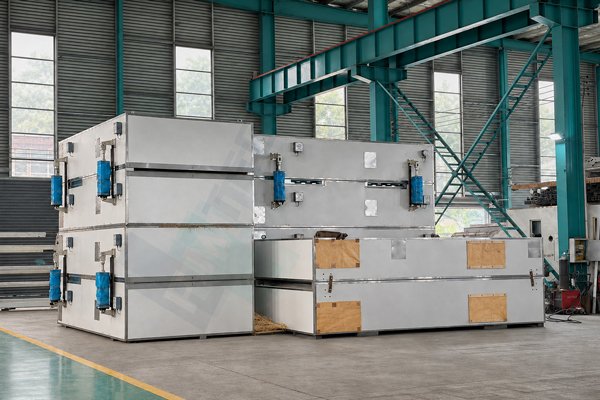
Rather than simply increasing drying temperature to achieve higher production capacity, mills should establish a suitable drying profile for each paper grade and coating formulation.
A Practical Troubleshooting Guide
Different defect patterns provide useful indications of where a problem may originate.
| Production symptom | Priority checks |
| Rough surface or visible particles | Dispersion and filtration |
| Pinholes | Entrained air and coating coverage |
| Continuous MD streaks | Blade edge and coating head |
| Uneven coating coverage | Base paper and metering conditions |
| Gradual coat-weight variation | Viscosity, temperature and solids |
| Blistering or surface dusting | Drying profile and binder system |
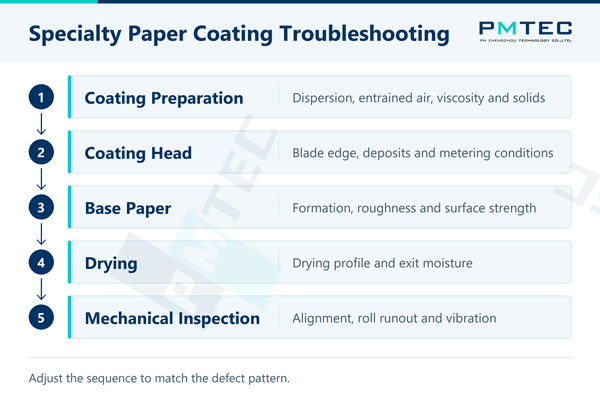
For general coating instability, a practical troubleshooting sequence is:
This sequence can be adjusted according to the actual defect pattern. Recording operating parameters and changing one variable at a time helps identify recurring problems more effectively.
PMTEC Engineering Perspective
A reliable coating system requires coordination between coating preparation, application equipment, base paper properties, drying and process control.
For both new production lines and existing machine upgrades, equipment selection should be based on the target paper grade, coating formulation and actual production requirements.
PMTEC provides integrated engineering support for paper coating systems, process optimization and production line upgrades, with a focus on product quality, operational stability and efficient material utilization.