
Paper-machine vacuum systems support sheet dewatering, web transfer, suction-roll operation and press-felt conditioning. They can also carry avoidable electrical and water costs when operating points no longer match current grades, speeds, furnishes or fabric conditions.
A reliable energy project begins by measuring the duty of each vacuum consumer and linking that duty to water removal and machine performance. Equipment replacement should come only after the mill understands where vacuum, airflow and power are being used.
Start with actual process demand
Vacuum demand is not fixed. It changes with sheet permeability, basis weight, furnish drainage, machine speed, forming configuration, roll and box sealing, felt condition and the amount of water entering each dewatering zone. Two consumers at similar vacuum levels may also require very different airflow.
This is why a single design value or a list of generic pressure bands cannot determine an efficient system. The mill should establish a stable operating envelope for each major grade and speed. The envelope must include vacuum, airflow, water removal and the production result that the vacuum is expected to protect.
Where avoidable energy use develops
| Condition | What the mill may observe | What to verify |
| Consumers with different duties share one header | Some points are over-vacuumed while another point limits the system | Pressure at each consumer, header losses, control-valve position and zoning |
| Throttling or bleed air controls capacity | Valves remain partly closed or outside air is admitted | Pump or blower operating point and whether speed or staging can match demand |
| Air leaks or poor sealing | Airflow and equipment load rise without better dewatering | Box seals, roll seals, flanges, flexible joints, valves and open connections |
| Restrictions or ineffective separation | Vacuum is unstable, lines carry water, or pressure loss is high | Pipe velocity, header size, separators, drop legs, drains and plugged lines |
| Liquid ring pump condition has deteriorated | Capacity or efficiency falls and operation becomes unstable | Internal wear, seal-water flow and temperature, speed and actual duty point |
| Old setpoints remain after production changes | Vacuum stays high although grade, furnish or speed has changed | Water removal, press dryness, transfer stability and quality at lower settings |
Use comparable measurements
Vacuum-system data are easy to misread. Record whether pressure is gauge or absolute, and measure at both the machine connection and the equipment inlet where practical. A pressure reading alone does not define capacity.
Airflow values must state their reference conditions. Actual cubic metres per minute at suction conditions cannot be compared directly with normal or standard cubic metres per minute unless they are converted to the same basis. Electrical demand should come from a power meter or drive data that have been checked against the electrical system; motor nameplate power is not the operating load.
For each stable production case, record at least:
- grade, basis weight, speed, furnish and fabric age
- vacuum and airflow at each important consumer or header
- actual pump or blower speed, valve position and electrical power
- water removal by dewatering zone where measurement is practical
- couch or press dryness, sheet transfer stability, breaks and quality indicators
- seal-water flow and temperature for liquid ring pumps, plus separator and drain condition
Match the technology to the measured duty
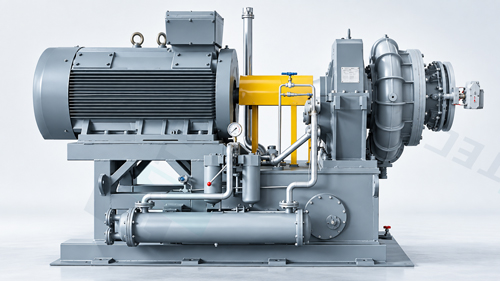
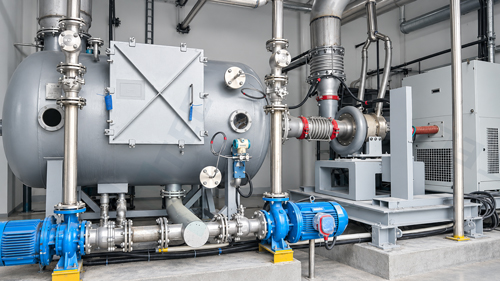
| Technology | Useful characteristics | Selection limits to confirm |
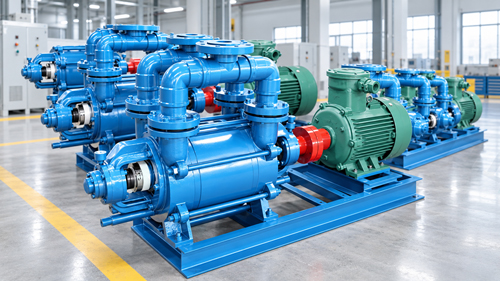
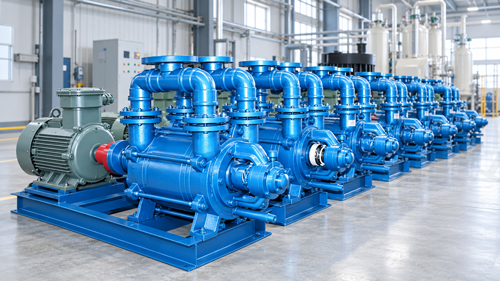
| Liquid ring vacuum pump | Established technology with good tolerance of wet gas and changing carryover | Actual efficiency at the required pressure and flow, pump condition, seal-water temperature and flow, permitted speed range and water separation |
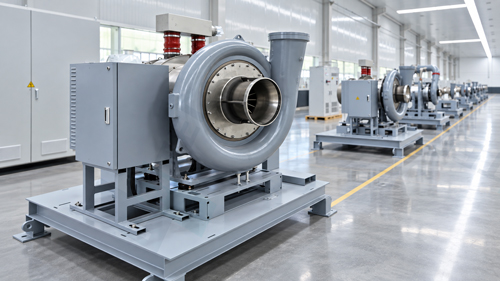
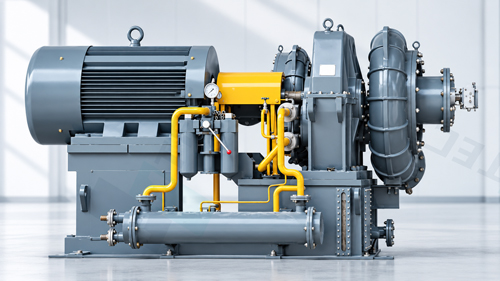
| Turbo vacuum blower | Dry operation, high airflow and adjustable capacity with a high-speed drive | Supplier duty map, required vacuum range, inlet water separation, gas cleanliness, turndown, control philosophy and exhaust heat use |
| Low-vacuum fan or blower | Can be efficient for high airflow at low differential pressure | Maximum stable vacuum and changing-load behavior; it is not a general substitute for higher-vacuum service |
Variable speed can reduce throttling and bleed losses when the machine demand and equipment map allow it. It does not automatically make every existing pump efficient. The permitted speed range, process stability, motor and drive suitability, and minimum operating limits must be checked with the equipment supplier.
For example, Runtech describes a 30-70 kPa operating range for its EP turbo-blower family. That is a product-specific statement, not a universal range for all turbo blowers. Inlet separation and the complete pressure-flow map remain part of the selection.
Follow a controlled optimization sequence
Define representative operating cases instead of averaging unlike grades and speeds.
Map every vacuum consumer, header, separator, pump or blower and control device.
Measure pressure, airflow, electrical power and water removal on the same time basis.
Repair leaks, blocked lines, faulty drains, separation problems and instrumentation errors.
Reduce or rezone vacuum in small steps while monitoring dryness, transfer, fabric condition, breaks and quality.
Only then evaluate speed control, equipment resizing, pump restoration, turbo-blower conversion or a hybrid arrangement.
Repeat the measurements after stabilization and compare equivalent production cases.
Treat published savings as case results
ABB and Runtech report that selected turbo-blower vacuum solutions can achieve energy savings of up to 70 percent compared with conventional pump-based systems. Runtech also publishes a broader 30-70 percent range for its complete RunEco rebuilds. These are supplier-reported results and potential ranges. They are not a guaranteed outcome for an individual mill.
The financial model should use measured baseline kilowatts for each representative operating case, the annual hours for those cases, and verified post-change power. Include seal-water use, maintenance, production constraints and any usable exhaust-heat recovery. If production or grade mix changes, compare specific consumption such as kilowatt-hours per tonne alongside total annual electricity.
The practical objective
The target is the lowest verified operating cost that still protects dewatering, sheet transfer, press dryness, quality and runnability. The best project may be a setpoint correction and leak repair, a new control strategy, an equipment rebuild, a partial replacement or a complete system redesign. Measurement determines which option is justified.
PMTEC can support vacuum-system mapping, field measurement planning, equipment review and retrofit development. For an initial assessment, mills should prepare the flowsheet, pump or blower data, current vacuum readings, measured power, production cases and any available water-removal or sheet-dryness data.