
Permanent magnet (PM) motor retrofit replaces conventional induction motors on paper machine drives with high-efficiency permanent magnet synchronous motors, most often on refiners, vacuum pumps, dryer section main drives, and stock preparation pumps where variable-speed, high-torque operation is the norm. For mills weighing energy cost against production uptime, understanding the process, which drive positions actually benefit, and what gains are realistic is the first step toward a sound upgrade decision.
What Is a Permanent Magnet Motor Retrofit?
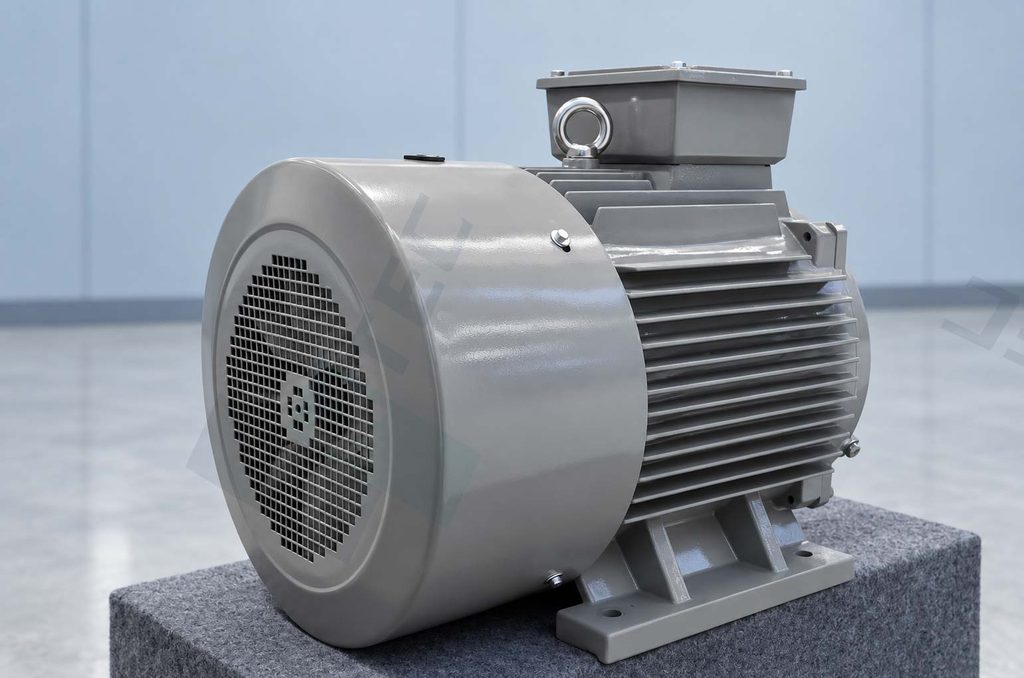
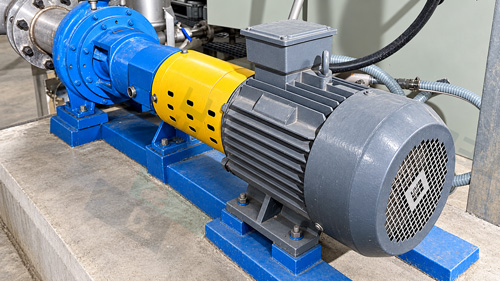
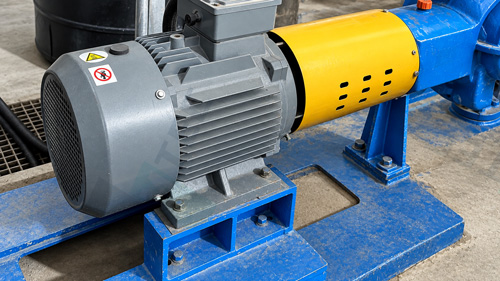
A PM motor retrofit replaces an existing induction motor’s rotor and stator assembly with a permanent magnet synchronous motor of matching or improved power rating, paired with a compatible variable frequency drive (VFD). An induction motor generates rotor flux through induced current and always carries some slip loss; a PM motor’s rotor field comes from embedded or surface-mounted magnets instead, which removes most rotor copper loss and supports higher torque density at a given frame size. Most mill retrofits keep the existing gearbox and swap only the motor and drive, since a direct-drive, gearbox-free design usually requires a redesigned mounting frame and is more common on new refiner or Yankee dryer installations than on retrofits.
Why Are Paper Mills Considering Permanent Magnet Motor Upgrades?
- Efficiency at partial load: induction motors lose efficiency sharply below about 50% load, while PM motors hold a flatter efficiency curve — relevant for pumps and fans that run on VFD trim most of the day.
- Torque density and footprint: comparable torque in a smaller frame, useful where floor space and coupling geometry are already fixed.
- Lower motor heat and cooling load: reduced rotor losses ease ventilation demand in enclosed drive rooms.
These are structural advantages of PM motor technology, not guaranteed savings for any specific mill — actual gains depend on the existing motor’s age, efficiency class, and duty cycle.
Which Drive Positions Benefit Most From PM Motor Retrofit?
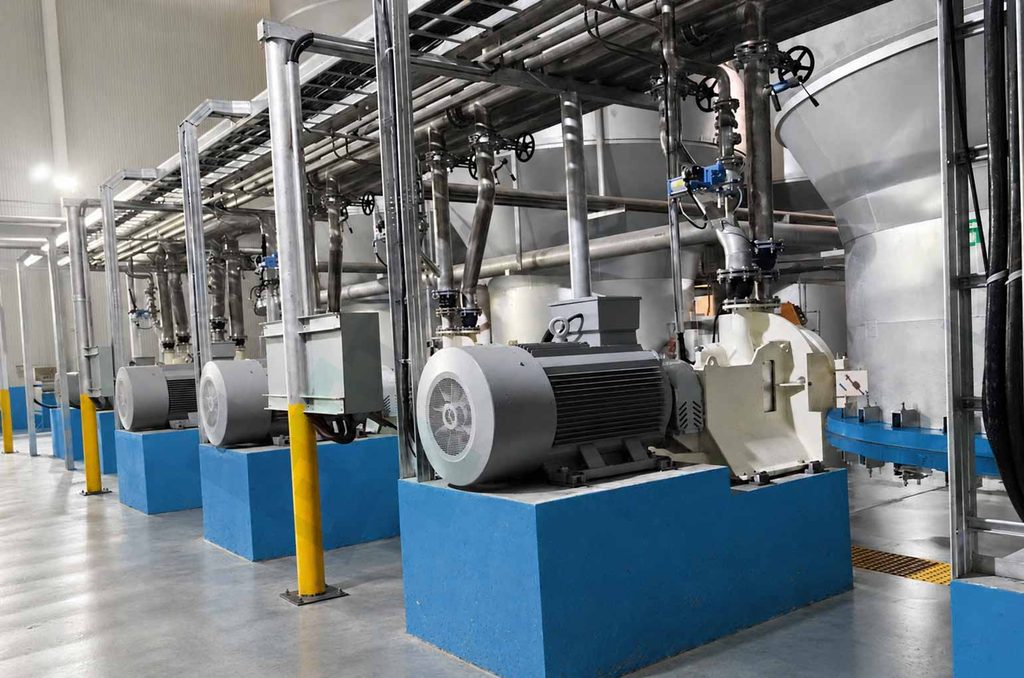
The best candidates share two traits: long running hours and a load profile that spends meaningful time below full rated load.
| Drive Position | Typical Duty Profile | Why PM Retrofit Fits |
| Refiners | Continuous, near-constant torque | Higher torque density shrinks motor frame; stable speed control aids refining consistency |
| Vacuum pumps / turbo blowers | Continuous, VFD-trimmed to demand | Flatter partial-load efficiency; complements turbo blower vacuum system upgrades |
| Dryer section main drives | Continuous, tight speed sync required | Higher low-speed torque supports smooth startup and section-to-section matching |
| Stock prep agitators / pulpers | Continuous or long-cycle, variable load | Sustained low-speed torque without a larger gearbox |
| Approach flow and stock pumps | Continuous, VFD-trimmed to consistency targets | Efficiency held across the trim range, not just at design point |
What Does the Retrofit Process Look Like?
A retrofit is a mechanical, electrical, and controls integration project, not a like-for-like swap. PMTEC follows seven stages:
- Load and duty-cycle audit — log actual current, speed, and running hours over a representative production period rather than relying on nameplate rating.
- Drive train compatibility check — verify shaft height, coupling type, bearings, and foundation bolt pattern against the candidate motor.
- Motor and drive sizing — select PM motor and VFD rating against the audited duty cycle, with margin for peak-torque events.
- Control system integration — map the new drive’s interface into the existing PLC or DCS, carrying over alarm and interlock logic.
- Installation and mechanical alignment — remove the induction motor, install the PM motor and drive cabinet, re-verify shaft alignment and coupling balance.
- Commissioning and load testing — run full speed and load range under supervision, confirming vibration and temperature stay within manufacturer limits.
- Performance verification — compare post-retrofit current draw and energy use against the stage-one baseline at the same production rate.
WWhat Efficiency Gains Are Realistic?
IEC 60034-30-1 efficiency classification gives a useful benchmark: induction motors installed before roughly 2015 are frequently IE2 or lower, while current PM motors are typically IE4 or IE5. The gap between an aging IE2 motor and an IE5 PM motor is generally larger than between a modern IE3 motor and the same PM motor — so the oldest motors on a mill’s drive list, not necessarily the largest, are usually the strongest candidates. Because actual savings depend on load factor, running hours, and local tariffs, a mill-specific payback estimate should come from the stage-one audit rather than a generic percentage. As a directional reference only, partial-load applications such as vacuum and stock pumps tend to show larger relative improvement than drives already running near full rated load most of the time, such as many refiners.
Case Example: Approach Flow Pump Retrofit Evaluation
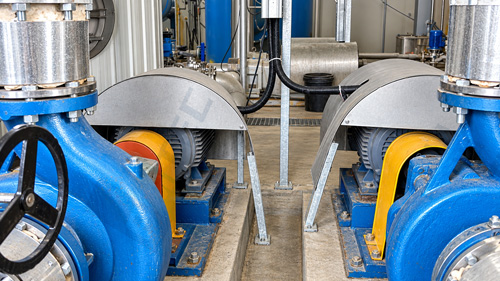
PMTEC carried out a retrofit evaluation for the approach flow pump system at a mid-capacity linerboard mill in Southeast Asia (mill and location withheld at the client’s request). The three approach flow pumps ran on original-build induction motors, VFD-trimmed to a target headbox consistency rather than run at full speed; the stage-one audit showed them spending most running hours below 70% of rated speed, making them stronger partial-load candidates than the mill’s refiner motors.
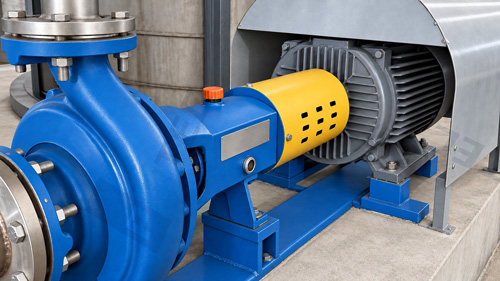
Following the compatibility check, PMTEC proposed a like-for-like frame retrofit — new motor and drive on the existing pump casing, coupling, and baseplate — with commissioning scheduled around a planned maintenance shutdown to avoid unplanned downtime. Site-specific energy and payback figures are confidential to the client and are not published here; this example illustrates the evaluation sequence rather than a specific result.
What Should Mills Evaluate Before Committing?
- Duty cycle regularity: erratic load patterns are harder to size correctly and show less consistent payback.
- Payback horizon versus mill capital cycle: compare against the mill’s own investment horizon rather than treating payback as a standalone case.
- Retrofit versus full replacement: where the gearbox, coupling, or foundation is near end of life, replacing the full drive train may be more cost-effective.
- Drive electronics compatibility: confirm the plant’s PLC/DCS accepts the new VFD’s communication protocol without a separate gateway.
- Spare parts and service access: confirm PM motor spares and qualified service support are available in the mill’s region.
PMTEC is a full mill solutions provider to the pulp and paper industry, supplying paper machinery, stock preparation systems, and drive system components for mill projects worldwide.
The process outlined above — duty-cycle audit through performance verification — applies whether the retrofit target is a single pump motor or a mill-wide program.