
A tissue rewinder protects softness and bulk. A containerboard rewinder builds a hard, clean roll that unwinds well on a corrugator. Here is what differs between them, and what to define before you choose one.
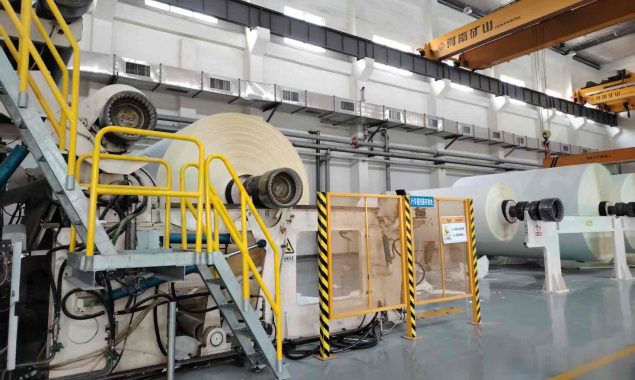
After the reel, the parent roll is unwound, slit to the required widths, checked for defects and wound again into rolls of the right diameter and hardness. Both grades use the same controls: web tension, nip load, winding torque, guiding and roll handling. What changes is how they are set, and that depends on what happens to the paper next.
Which “tissue rewinder” do you mean?
The term covers two different machines. A tissue-mill slitter or combiner rewinder takes the parent roll from the tissue machine, slits it, combines plies if needed and winds reels for sale or for a separate converting plant. A tissue converting rewinder makes the finished logs for toilet tissue or kitchen towel, usually with embossing, perforation, core handling and tail sealing. This article compares the tissue-mill rewinder with the containerboard rewinder, and points out converting requirements where they matter.
Why does tissue need a gentle rewinder?
What does a containerboard rewinder need to do?
Tissue is light, weak and bulky. That bulk gives the softness and absorbency, and it is easy to lose. Too much tension or nip pressure squeezes the sheet flat or breaks it. The goal is not the hardest roll. It is a roll that is stable and unwinds reliably in converting without damaging the sheet. So a tissue rewinder works with very low tension and a light nip, and it needs fast, stable torque control, because the line runs at high speed and small errors show up quickly. Centre drive support is often used for this reason. When plies are combined, ply alignment and stable unwind stands become part of the design. Dust is the other everyday problem: tissue makes a lot of it, so dust extraction around the slitters matters.
Containerboard (linerboard and corrugating medium) is heavy and strong, and the roll has a long journey. It is moved, stored and finally unwound on a corrugator, where a loose or uneven roll causes splice trouble and downtime. So the rewinder has to deliver accurate widths and a hard, even roll with a controlled hardness profile. Slitter positioning and knife condition decide the finished width and edge quality. Heavy rolls also need strong core chucks or shafts, lifting equipment and sturdy handling. Two-drum winders are common here, but single-drum and centre-assisted designs are also used. The choice depends on the grade, roll size and quality target, not on a rule that one design always wins.
Tissue vs containerboard rewinder: side-by-side comparison
| Item | Tissue-mill rewinder | Containerboard rewinder |
| Typical output | Slit and combined reels for converting | Saleable linerboard or medium rolls |
| Sheet | Very light, weak, bulky | Heavy, strong, dense |
| Main goal | Keep bulk; reels that unwind reliably | Accurate width, hard stable roll, clean edges |
| Web tension and nip | Very low tension, light nip | Higher tension, firm nip |
| Roll hardness | Moderate, set to protect the sheet | Hard, with a controlled profile |
| Web and slit handling | Gentle transport; ply alignment when combining | Slit-width control, knife condition |
| Roll handling | Large diameter, low density | Heavy rolls, strong chucks and lifting |
| Special functions | Ply combining; embossing and perforation belong to converting lines | Mainly slitting, winding and roll finishing |
| Main concerns | Web breaks, lost bulk, poor unwinding, dust | Telescoping, wrinkles, soft or hard edges, damaged slit edges |
Common roll defects and what causes them
The same defect names appear in both, but the usual causes are not the same.
- Telescoping: layers slide sideways. It usually comes from soft winding or poor alignment.
- Starring: star-shaped wrinkles near the core. It often comes from tension or hardness set wrongly as the roll builds up.
- Crushed roll (mainly tissue): bulk is lost because of too much tension or nip.
- Loose or soft roll (mainly containerboard): too little nip or torque for a heavy sheet.
- Hard or soft edges and damaged slit edges (mainly containerboard): usually knife condition and setting.
Why rated speed is not enough
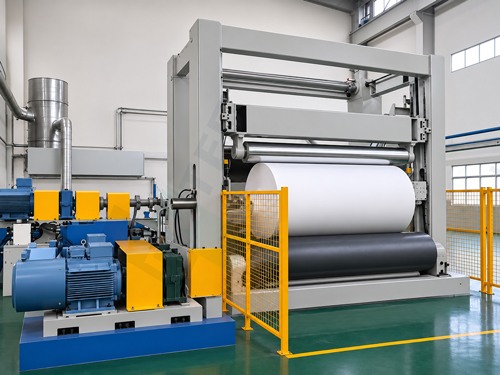
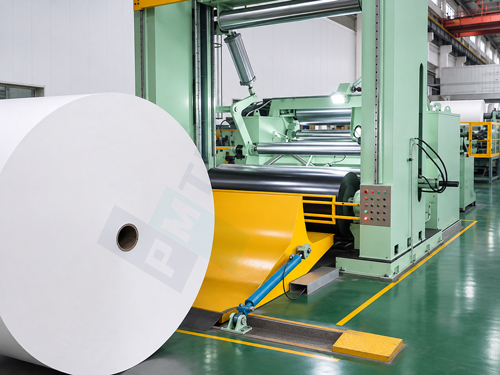
A high nameplate speed only matters if the machine runs consistently at your normal grades, widths and roll diameters. Output is lost to threading, splicing, set changes, roll removal, knife changes, cleaning, breaks and off-spec rolls. A better question than “how fast can it run?” is “how many acceptable rolls, or saleable tonnes, can it deliver in a shift?” For tissue projects, also check which machine a quoted speed belongs to: the tissue machine, the mill rewinder or the converting rewinder. Their speeds cannot be compared directly.
Upgrading an existing line: find the real bottleneck first
A new rewinder is not always the first step. Poor slit quality may come from knife condition and setting. An unstable roll may need a review of winding settings, roll profile or nip control. Low output may come from roll logistics and changeover time, not from top speed. Look at the paper properties, the existing equipment, the downtime records and the defects found downstream before deciding.
PMTEC is a paper mill solutions provider that integrates equipment and process design across the whole machine line. This article reflects how we evaluate a rewinder: as part of the complete mill and converting process, not as an isolated specification.